Table of contents
- How do CCNA and CCNP differ in level and scope?
- What changes from CCNA fundamentals to CCNP-level network work?
- What kind of practice matches the higher practical expectations?
- How does the exam path differ?
How do CCNA and CCNP differ in level and scope?
CCNA is associate-level, while CCNP is professional-level. Both certifications test network professionals’ knowledge and skills, but CCNP is considered more advanced. The distinction is also one of scope: CCNA provides a broad foundation, while CCNP calls for deeper understanding and hands-on skill.
That difference matters when you decide what the certification is meant to represent in your progression. CCNA is the foundation stage in this comparison; CCNP asks you to carry that knowledge into more demanding networking work. The professional label alone does not explain the difficulty. The more useful question is whether you are ready to move beyond understanding core topics and apply networking knowledge in deeper technical situations.
For CCNP Enterprise, identified roles include network administrator, network engineer, and network consultant. These examples give the professional-level credential a concrete career context, while keeping the comparison specific to Enterprise rather than implying that either certification guarantees a particular job or outcome.
What changes from CCNA fundamentals to CCNP-level network work?
The CCNA foundation remains part of the progression
CCNA topics include network fundamentals, network access, IP connectivity, IP services, security fundamentals, and some automation and programmability. These fundamentals remain relevant as you progress: they are the base of CCNP, not material to leave behind once you move to a professional-level certification.
This makes the progression cumulative. A candidate should be able to connect core networking concepts to the more advanced work that follows, rather than treating foundational knowledge and professional-level knowledge as separate tracks. If your understanding of the basics is shaky, the next stage has less to build on; if those topics are familiar, the comparison shifts toward how deeply and practically you can apply them.
Advanced work adds execution and troubleshooting demands
CCNP goes deeper into enterprise design, advanced routing and switching, and real troubleshooting. The difference is not only how much you know about a topic, but whether you can work with network behavior: configure it, verify what happened, and troubleshoot when the result is not as expected.
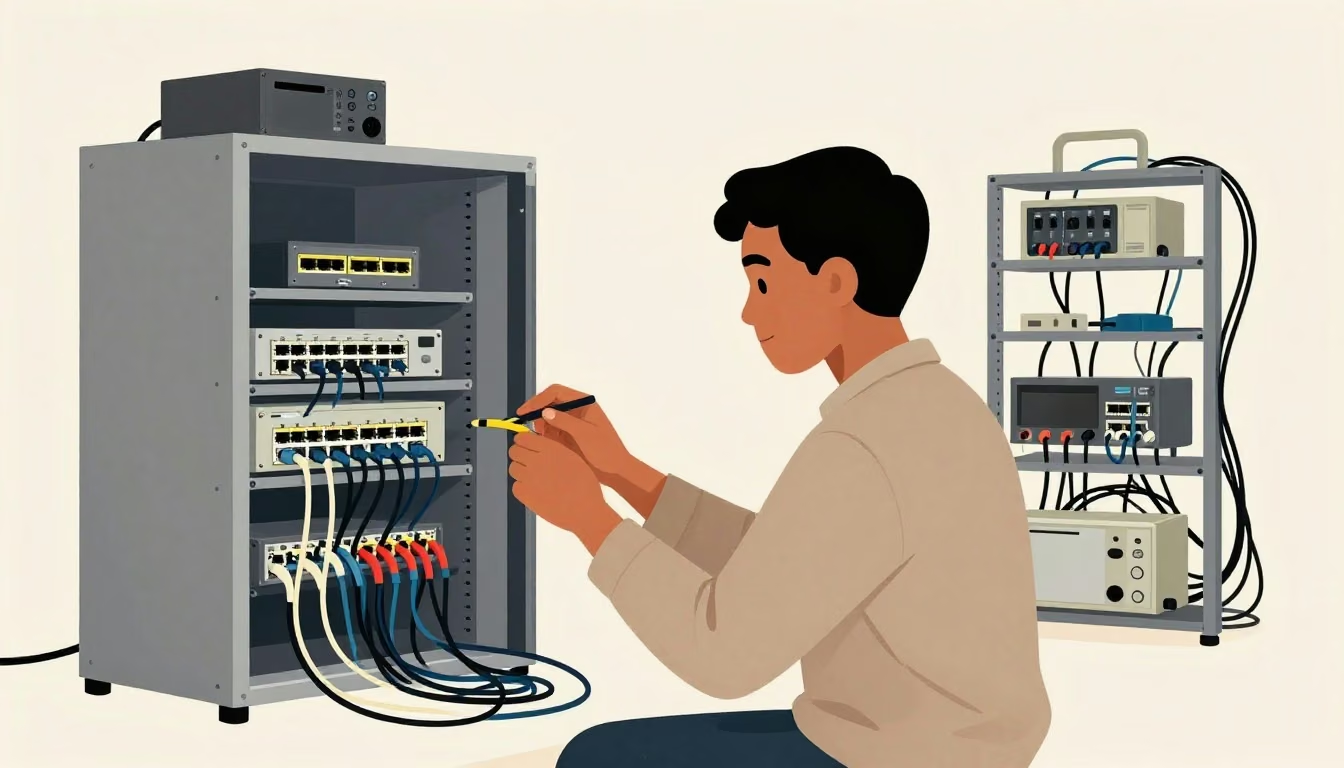
That is the bridge between reading about routing and switching and being able to configure, verify, and troubleshoot under pressure. CCNA provides a broad foundation, while CCNP demands a more expert level of understanding and hands-on skill. For a candidate judging readiness, the practical check is whether you can move from describing a concept to working through its behavior in a network scenario.
This distinction also helps make “difficulty” more specific. If the main challenge is learning foundational terminology and core networking areas, the associate-level scope is the relevant comparison. If the challenge is applying that foundation across deeper enterprise design, routing and switching, and troubleshooting work, the professional-level scope is the larger step.
What kind of practice matches the higher practical expectations?
Foundational simulation has a different ceiling
Packet Tracer can support foundational skills, but it lacks the depth and realism needed for advanced certifications such as CCNP or CCIE. That makes the practice environment part of the difficulty comparison: a tool that helps reinforce fundamentals may not prepare you for the practical demands associated with more advanced work.
When reviewing your preparation, ask what the practice lets you do. Repeating a familiar setup can help reinforce concepts, but it is not the same as being able to execute a workflow when network behavior needs to be checked and troubleshot under pressure.
Realistic labs build execution through repetition
A real or near-real lab environment is the difference between memorizing a workflow and being able to execute it under pressure. Network troubleshooting improves through repetition, not passive reading, so practice should give you opportunities to work through behavior rather than only recognize terms or steps.
Relevant lab work includes routing protocols, redistribution, spanning tree behavior, VPN fundamentals, and verification across multiple devices. Those are useful checks when deciding whether your practice matches the deeper networking work you are preparing for. For readers comparing ENARSI-focused practice options, 9tut ccnp enarsi is a relevant resource to examine.
The practical question is not whether you used a particular product; it is whether your practice has enough realism for the work you need to perform. Look for repeated troubleshooting and multi-device verification, alongside the foundational exercises that helped you learn the basics.
How does the exam path differ?
CCNA uses one comprehensive exam
The CCNA path requires passing a single comprehensive exam. Its coverage includes network fundamentals, network access, IP connectivity, IP services, security fundamentals, and some automation and programmability. That gives the CCNA route one exam in which to demonstrate the breadth of its foundational scope.
For planning purposes, the single-exam structure is the baseline in this comparison. It does not make the subject matter trivial; it means the path is organized around one comprehensive assessment rather than separate core and concentration exams.
The CCNP path separates core and concentration exams
The CCNP structure requires passing a core exam and one concentration exam. Candidates choose a concentration, so the path combines a shared core requirement with a choice that can be tailored to career goals. The additional exam requirement contributes to the difference in challenge and gives the path more flexibility.
When comparing the routes, account for both the depth of the material and the structure of the assessments. CCNA asks you to pass one comprehensive exam; CCNP divides its requirements between core and concentration exams. The practical next step is to identify the CCNP path you are considering and understand which concentration fits your intended direction, rather than treating CCNP as a single-exam continuation of CCNA.