Table of contents
- Which Online Coaching Format Fits Your CCNA, CCNP, or CCIE Preparation?
- What Should You Look for in a Trainer Demo and Lab Session?
- Which Course and Delivery Details Should You Confirm Before Enrollment?
Which Online Coaching Format Fits Your CCNA, CCNP, or CCIE Preparation?
The available choices include private live online coaching, one-to-one classes, group classes, classroom training, and online or offline delivery.
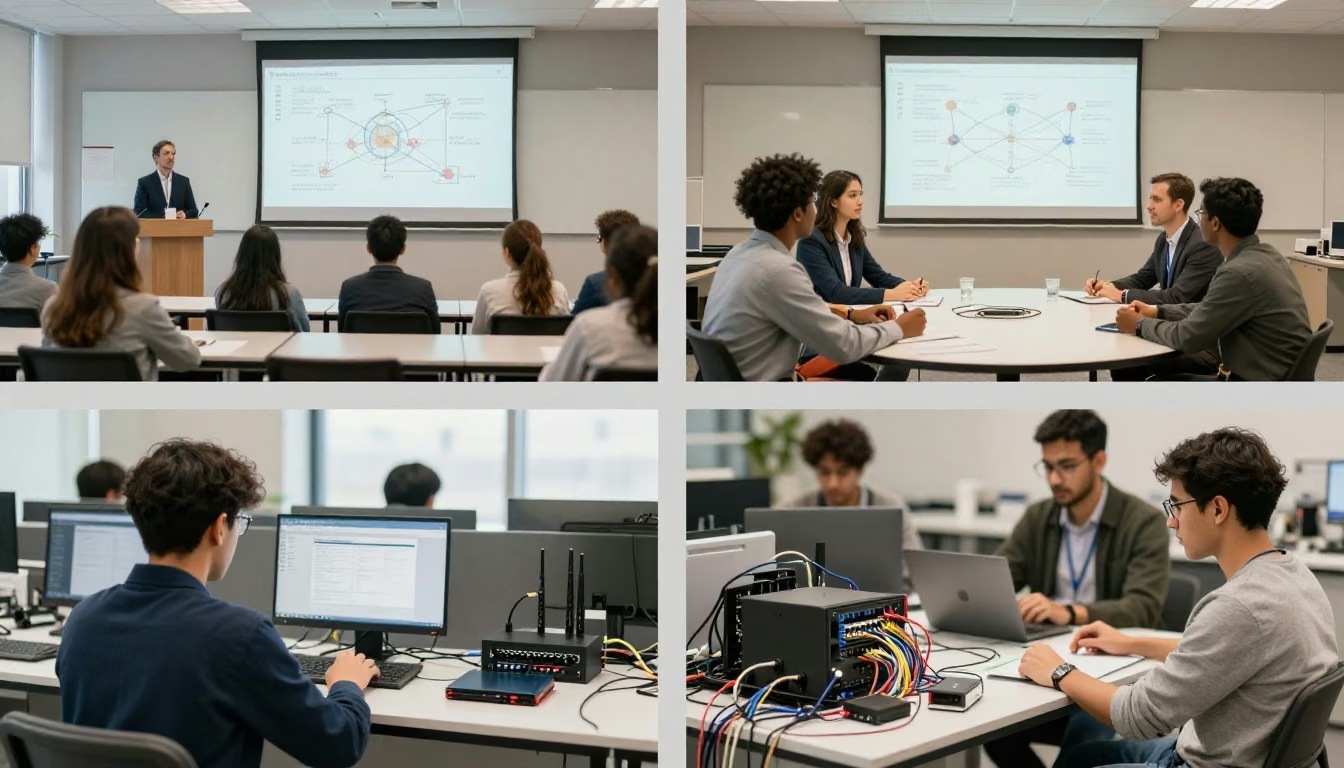
Private live online and one-to-one coaching
Private live online coaching means private online live one-to-one technology coaching. One-to-one classes are also associated with personal attention when the budget allows. This format may therefore suit a learner who wants direct trainer attention and is prepared to choose an individual arrangement.
Before selecting private coaching, confirm that the intended CCNA, CCNP, or CCIE course is available in that format. Ask how trainer contact works during sessions, which Cisco track is covered, how the schedule is arranged, and how practical work is delivered. A one-to-one format defines the interaction model; it does not by itself identify the course content or lab setup.
Individual online learning is intended for people who want to study and prepare from their comfort zone. Confirm what “individual” means for the course you are considering. It may refer to private live instruction, individual access, or another arrangement. Ask for the format to be stated clearly before comparing it with group or classroom options.
Group, classroom, and online or offline delivery
Classroom training and online classes are available. Online and offline classes are also offered across the listed training choices. These options give you several ways to compare location, comfort, participation, and access, but do not establish that every Cisco level or track is available in every format.
If interaction with other learners matters, ask whether the selected course is a live group class and how participation works. If comfort or location matters, ask whether the course is delivered online and what access is available outside scheduled sessions. If you prefer classroom learning, confirm the location and how classroom instruction connects with practical lab work.
The available course choices include CCNA, CCNP, and CCIE. Online networking training includes areas such as Enterprise, Security, Collaboration, Data Center, and Service Provider. Match the delivery format to the exact Cisco course and track instead of assuming that one arrangement applies to the entire course list.
What Should You Look for in a Trainer Demo and Lab Session?
A trainer demonstration gives you a way to examine the teaching arrangement before enrollment. Use it to ask questions, understand the class flow, view the practical environment, and clarify how the selected course will be delivered. Keep the questions tied to the Cisco level, track, format, and lab setup you intend to choose.
Use the demonstration to test trainer interaction
Use the training demonstration to experience the teaching style, ask questions, and understand the class flow before committing. The session can also let you experience the training first-hand and clear doubts directly with the trainer. A no-obligation demonstration can be arranged after you submit your details.
Ask how a typical class is organized and how questions are handled. Name the intended course and technology area so the discussion remains connected to your choice. Ask how the trainer will be available during the course and how the schedule will be arranged.
Scheduling is part of the enrollment decision. Plan your schedule along with the trainer, and confirm the planned timing and the trainer’s role in organizing it. Do not assume that every format follows the same scheduling arrangement.
Check real labs, hardware, and topology visibility
You can ask to meet the trainer and see real labs and topologies in action. Real hardware is available to teach all the modules in the offering that provides it. These are concrete items to inspect: the lab environment, the topology being demonstrated, and the relationship between practical work and the selected course modules.
Ask the trainer to show the lab or topology relevant to your target Cisco track. Clarify which modules use that environment and whether the same setup will be available during your practice. Real hardware should be confirmed for the specific course and format rather than assumed across every option.
A topology demonstration should relate to the course you want. Confirm what the demonstration covers, which track it belongs to, and how the lab fits into the online, classroom, or offline arrangement. Keep the discussion tied to the exact course and practical requirements you plan to follow.
Confirm the practice-access model
Practice access differs by offering and must be confirmed for the specific course. Students can receive 24x7 access to labs for practice in the offering that provides that access. Another offering uses no simulation or emulator. These arrangements should not automatically be applied to every CCNA, CCNP, or CCIE option.
Ask whether lab access is included, when it can be used, and which environment supports the selected course. Confirm whether practice uses real hardware, simulation, or an emulator. When topology viewing is available, ask to see the relevant topology before enrollment. Also confirm whether the stated access applies to your chosen format and course level.
The practical check is simple: match the environment with your preparation arrangement. Confirm the access period, equipment or environment, and connection to the Cisco track you plan to study. A lab arrangement for one course should not be treated as included with another course or delivery format.
Which Course and Delivery Details Should You Confirm Before Enrollment?
Begin with the intended Cisco level and technology area. Then verify the delivery arrangement, trainer access, schedule, demonstration, and practical environment. The available Cisco choices include CCNA, CCNP, and CCIE, with networking areas including Enterprise, Security, Collaboration, Data Center, Service Provider, Palo Alto, F5 Load Balancer, Check Point, and SD-WAN.
Match the course to the Cisco level and track
Write down the exact target before comparing formats: CCNA, CCNP, or CCIE. Then identify the Cisco track or technology area attached to that course. The course level alone does not identify whether the training concerns Enterprise, Security, Collaboration, Data Center, Service Provider, or another listed area.
Ask the advisor or trainer to repeat the course name and track during the enrollment discussion. Confirm that the demonstration, lab topology, and practice environment relate to the same selection. This keeps the delivery decision connected to the certification level and subject area you intend to prepare for.
If you are comparing readiness questions around CCNP, review ccnp difficulty separately from the delivery-format decision. Then return to the exact course, track, trainer arrangement, and lab access you intend to choose.
Confirm the delivery and trainer arrangement
After identifying the course, confirm whether it is offered as online live coaching, private one-to-one coaching, a group class, classroom training, or an offline option. Online training is available for CCNA, CCNP, and CCIE across multiple networking areas, while classroom and online classes are also available.
Ask who will teach the course, how you will contact the trainer, and how the schedule will be planned. Request a demonstration before committing so you can ask questions and understand the class flow. Also ask whether the trainer will show the labs and topologies relevant to your chosen course.
Compare the course level, delivery setting, trainer interaction, schedule, and practice access together. Looking only at the course title can leave the format and lab arrangement unresolved.
Use a practical enrollment checklist
Before enrollment, confirm these points:
- The exact course level: CCNA, CCNP, or CCIE.
- The Cisco track or technology area covered.
- The delivery format: private, group, classroom, online, or offline.
- How trainer questions and schedule planning will work.
- Whether a relevant demonstration is available.
- Whether you can see the applicable labs and topologies.
- Whether practice uses real hardware, simulation, or an emulator.
- What lab access is provided for the selected course.
Evedumps recommends making the course and delivery decision from these confirmed details rather than from the course title alone. Connect the intended Cisco level with the format, trainer arrangement, schedule, and practical access offered for that exact option. Use the demonstration to resolve trainer, schedule, and lab questions before committing.