Table of contents
- CCNP Enterprise at a Glance
- Check Your Experience Before You Start
- Complete the Core Exam
- Choose One Enterprise Concentration
- A Simple Route Through the Certification
- What to Do After Passing
To become CCNP Enterprise certified, you need to pass two exams: the Implementing and Operating Cisco Enterprise Network Core Technologies exam, identified as 350-401 ENCOR, and one CCNP Enterprise concentration exam of your choice.

The path is therefore straightforward in structure: understand the enterprise networking foundation tested by the core exam, select a concentration that matches your current position or career goals, and pass both exams. CCNP Enterprise focuses on enterprise infrastructure, virtualization, assurance, security, and automation. The certification is intended to demonstrate the ability to scale and maintain enterprise networks as their demands grow.
CCNP Enterprise at a Glance
CCNP Enterprise is a Cisco professional-level certification focused on enterprise network technologies. Cisco describes the certification as demonstrating expertise in enterprise infrastructure, virtualization, assurance, security, and automation. These areas give the certification a broad foundation while leaving room for a more specific concentration in the second exam.
The certification requires two exams. The first is a common core exam. The second is a CCNP Enterprise concentration exam selected by the candidate. Passing only the core exam does not complete the CCNP Enterprise path because the certification requires both parts.
This two-exam structure gives candidates a shared enterprise networking foundation and a way to focus their certification on a particular technical direction. The concentration is not an additional prerequisite before the core exam. It is the second required exam in the certification route.
Cisco's description also connects CCNP Enterprise with the work of scaling and maintaining enterprise networks. The certification covers areas such as enterprise infrastructure, virtualization, network assurance, security, and automation. Together, these areas represent the broad technical context in which the core and concentration exams are used.
Check Your Experience Before You Start
Cisco states that CCNP Enterprise has no formal prerequisites. A candidate does not have to hold a previously listed Cisco certification in order to begin this certification path. The absence of a formal prerequisite answers the eligibility question, but it does not mean that every candidate will have the same preparation needs.
Cisco says learners often have three to five years of experience implementing enterprise network solutions. This is a recommended experience context, not a compulsory admission rule. The distinction matters when deciding whether to begin: a candidate can meet the formal prerequisite policy without having that stated experience, while still needing to assess whether the subject matter matches their current knowledge.
The experience description is specifically connected to implementing enterprise network solutions. It should not be interpreted as a requirement for a particular job title, employer, degree, or earlier certification. The relevant question is whether the candidate has enough familiarity with enterprise networking concepts and implementation work to engage with professional-level exam topics.
A candidate evaluating the path can separate the decision into two checks. The first check is formal eligibility: Cisco lists no formal prerequisites. The second check is preparation context: Cisco says that learners often bring three to five years of enterprise network implementation experience. These checks produce different answers and should not be combined into a claim that the experience is mandatory.
Complete the Core Exam
The first required exam is Implementing and Operating Cisco Enterprise Network Core Technologies, identified in the material as 350-401 ENCOR. This exam establishes the common technical foundation for the CCNP Enterprise route before the candidate completes a concentration exam.
The core exam covers enterprise infrastructure. The described topic areas include architecture, virtualization, infrastructure, network assurance, security, and automation. Cisco's certification description also identifies dual-stack architecture as part of the enterprise networking knowledge associated with the certification.
These topics connect several parts of enterprise network operation. Architecture concerns how the network is structured. Infrastructure concerns the communication protocols and network components that support operation. Virtualization concerns virtual machines, virtual switches, and the separation and management of data paths. Network assurance concerns diagnosing and fixing network problems and verifying networking features for performance.
Security and automation are also included in the described core topic set. The core exam therefore is not limited to one device type or one narrow operational task. It provides the shared base for the professional-level enterprise focus before the candidate chooses a more specialized subject area.
The role of 350-401 ENCOR is important when planning the sequence. It is the common exam for the CCNP Enterprise path, while the concentration exam supplies the selected area of emphasis. A candidate should identify the core exam correctly before looking for preparation materials or practice questions, because the core and concentration exams are different parts of the route.
Choose One Enterprise Concentration
After identifying the core exam, the candidate must choose one CCNP Enterprise concentration exam. The concentration is selected by the candidate and forms the second exam required for the certification. The available choices cover different technical directions rather than repeating the same core subject.
The concentration areas identified in the material include advanced routing and services, SD-WAN, enterprise network design, enterprise wireless, automation, cloud connectivity, and enterprise network assurance. The listed exam options include Implementing Cisco Enterprise Advanced Routing and Services v1.0, Implementing Cisco SD-WAN Solutions, Designing Cisco Enterprise Networks, Designing Cisco Enterprise Wireless Networks, Implementing Cisco Enterprise Wireless Networks, Automating and Programming Cisco Enterprise Solutions, Designing and Implementing Cloud Connectivity, and Designing and Implementing Enterprise Network Assurance.
The concentration choice should be connected to the candidate's current position or career goals. This does not require ranking one concentration above another. It means using the candidate's intended direction to narrow the options to a subject area that is relevant to their work or objectives.
Match the Concentration to Your Direction
A candidate whose focus is routing and services can examine the advanced routing and services concentration. The material identifies this area as Implementing Cisco Enterprise Advanced Routing and Services v1.0, with exam code 300-410 ENARSI.
A candidate interested in software-defined wide-area networking can consider Implementing Cisco SD-WAN Solutions, identified with exam code 300-415 ENSDWI. SD-WAN is a distinct concentration area in the listed CCNP Enterprise options.
Enterprise network design is represented by Designing Cisco Enterprise Networks, identified with exam code 300-420 ENSLD. This option is aligned with the design focus named in the concentration list.
Wireless candidates can distinguish between the two wireless options. Designing Cisco Enterprise Wireless Networks is identified with exam code 300-425 ENWLSD, while Implementing Cisco Enterprise Wireless Networks is identified with exam code 300-430 ENWLSI. The first is presented as a design-focused option and the second as an implementation-focused option.
Automation is represented by Automating and Programming Cisco Enterprise Solutions, identified with exam code 300-435 ENAUTO. Cloud connectivity is represented by Designing and Implementing Cloud Connectivity, identified with exam code 300-440 ENCC. Enterprise network assurance is represented by Designing and Implementing Enterprise Network Assurance, identified with exam code 300-445 ENNA.
The practical selection question is not which concentration is universally best. The supported distinction is which listed subject is closest to the candidate's current position or career goals. A candidate should first identify the technical direction they want the certification to represent, then compare that direction with the named concentration areas and exam titles.
A Simple Route Through the Certification
Start by confirming the certification target: CCNP Enterprise.
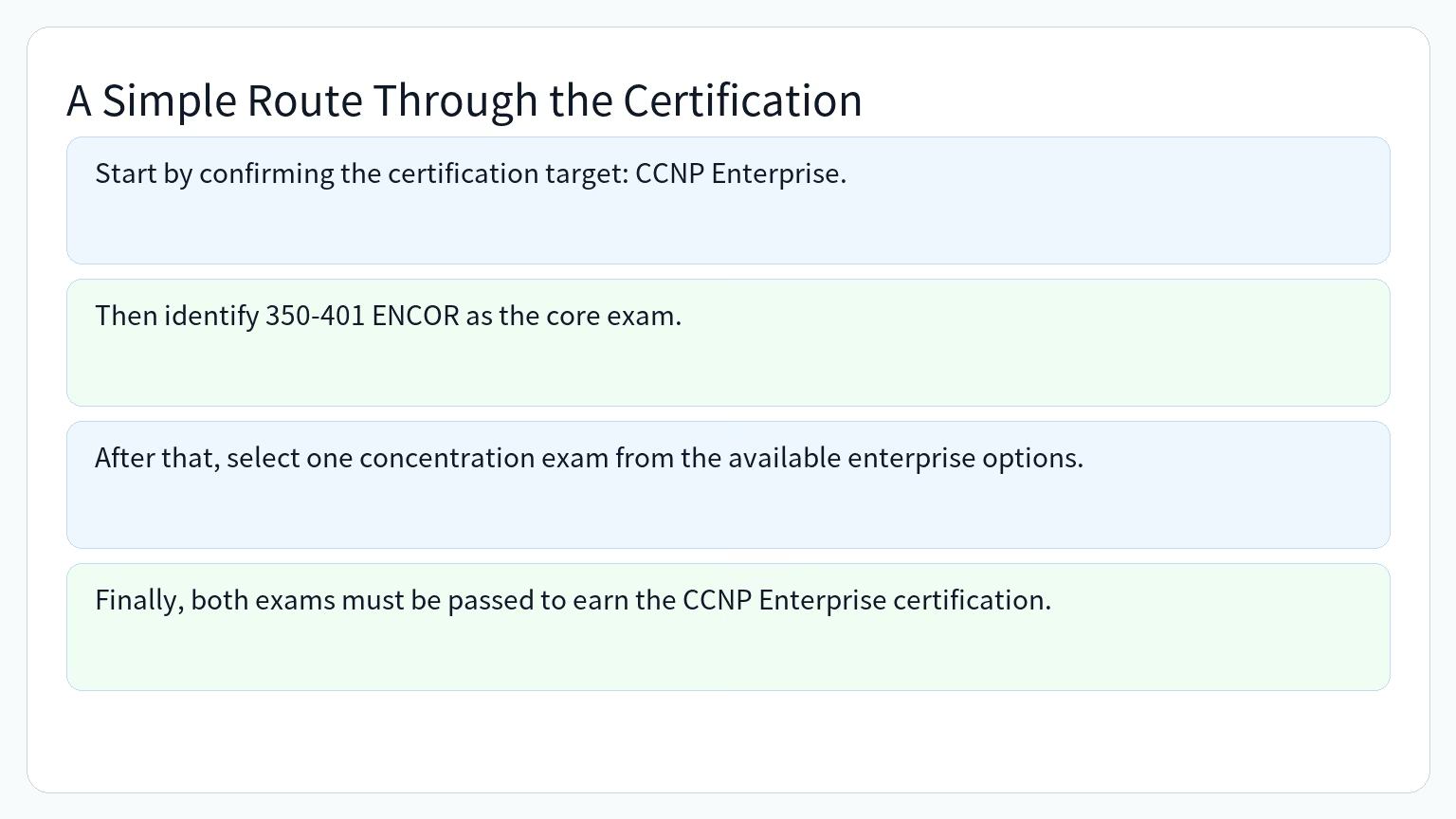
Then identify 350-401 ENCOR as the core exam. Its purpose is to assess the shared enterprise network foundation, including enterprise infrastructure, architecture, virtualization, network assurance, security, and automation. After that, select one concentration exam from the available enterprise options.
The concentration decision should follow the direction the candidate wants to develop or demonstrate. Routing and services, SD-WAN, design, wireless, automation, cloud connectivity, and network assurance are separate areas in the listed options. Choosing one relevant area keeps the second exam connected to the candidate's position or career goals.
Finally, both exams must be passed to earn the CCNP Enterprise certification. The route is not complete after passing only 350-401 ENCOR, and the concentration exam is not optional. The two exams work together: the core exam covers the shared foundation, while the chosen concentration represents a specific enterprise networking focus.
What to Do After Passing
Cisco states that the CCNP Enterprise certification is valid for three years. Before the certification expires, Cisco says it can be renewed with Continuing Education credits or by retaking exams.
The three-year validity period should be included in the certification plan from the beginning. It gives the candidate a defined period of validity after completing the required exams and identifies the point at which renewal planning becomes relevant. The renewal options described by Cisco are Continuing Education credits and retaking exams before expiration.
The complete answer to how to become CCNP Enterprise certified is therefore a two-part exam route with no formal prerequisites: pass 350-401 ENCOR, pass one CCNP Enterprise concentration exam, and select that concentration according to the candidate's current position or career goals. Cisco's recommended experience context is three to five years implementing enterprise network solutions, but it is not stated as a formal eligibility requirement. Once earned, the certification is valid for three years and can be renewed through Continuing Education credits or by retaking exams before expiration.